

A friend of mine from college raised a seed round last week for his smart-parking infrastructure startup. Shoutout Schaefer if you’re reading this! I’ve seen a few companies in the space fundraise in recent months and figured this is as good a time as any to take a look at one startup focusing on parking management.
It’s hard to appreciate, but the management of parking operations is a highly complex, convoluted, and expensive business to be in.
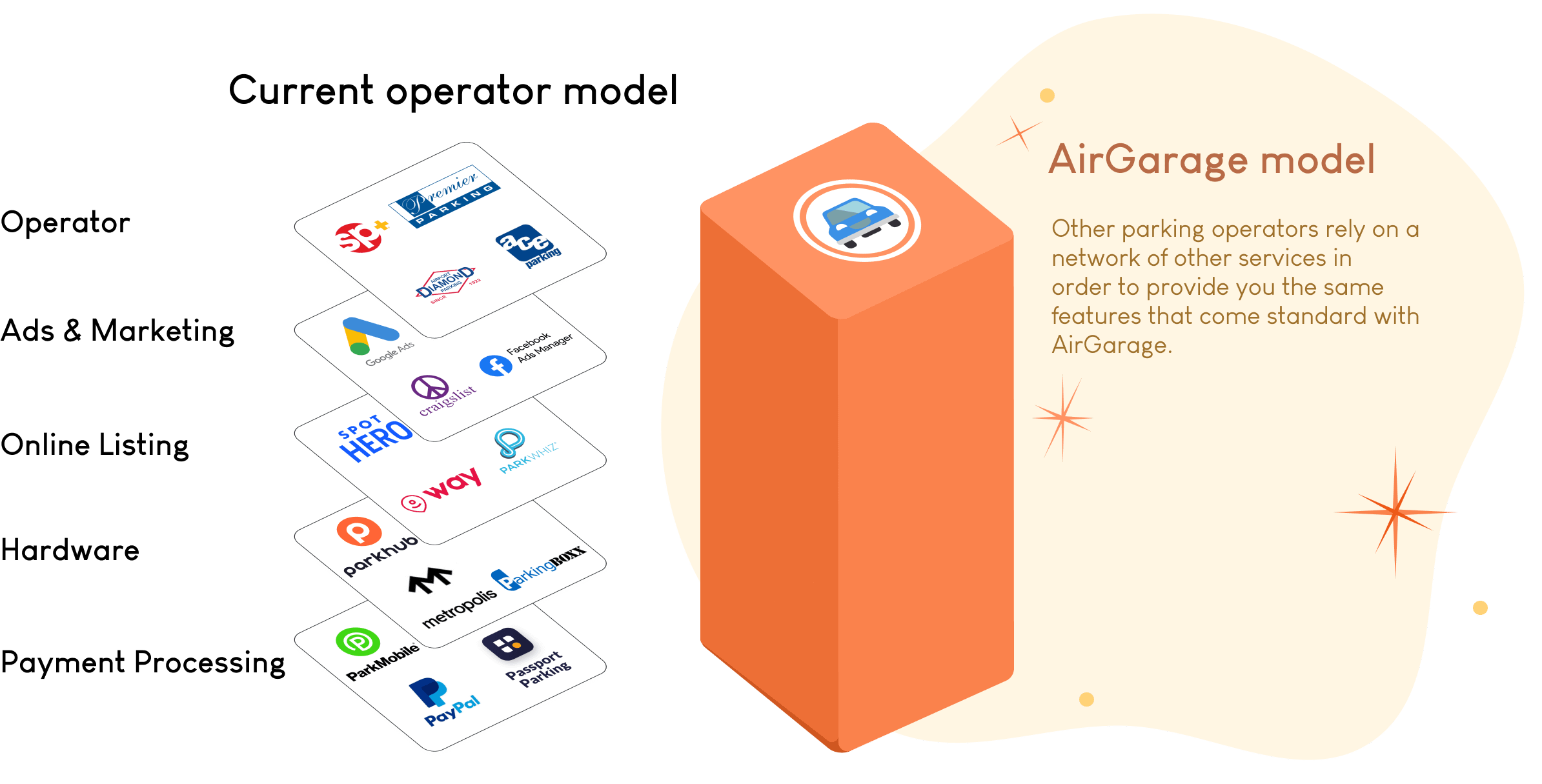
The first player in a typical parking business works is the owner. The parking lot owner hires a parking lot operator company to manage the parking lot and all of its operations. The operator lists the lot and its availability online and markets or advertises the lot using ad sites. Additionally, the operator will need to install certain hardware to provide parking tickets, track parking time, deal with entry / exit, scan license plates, deal with payment, and more. Oh and on payment in particular, the operator will need to enable a payment system that is easy, user-friendly, and efficient.
There are parking lot operators that have made a business out of this: managing multiple lots; but this is not an easy process, especially for an owner who wants to maximize revenues and transparency in how their business is performing. Many times, owners sign on an operator and there is little to no transparency into how much the garage is making, how it is run, its costs, etc. AirGarage (along with other companies) is aiming to help improve this process and the many pieces of it.
Let’s try to understand the importance of parking lots in our country a bit more.
You may not realize it, but in our major cities, there is more space for parking than space for actual human activity. Daniel Herriges from Strong Towns gives us some numerical context:
There are somewhere between 800 million and 2 billion parking stalls in the United States.
There are between 3 and 8 stalls for every registered vehicle.
Surface parking lots alone cover more than 5% of all urban land in the United States.
That represents an area greater than the states of Rhode Island and Delaware combined.
In Los Angeles, parking occupies more land than housing.
Daniel Herriges, Strong Towns
To gain a visual understanding of the dominance of parking in our physical use, here's an illustration of a county in Illinois. In this graphic, roads are highlighted in gray, parking is red and buildings are black:
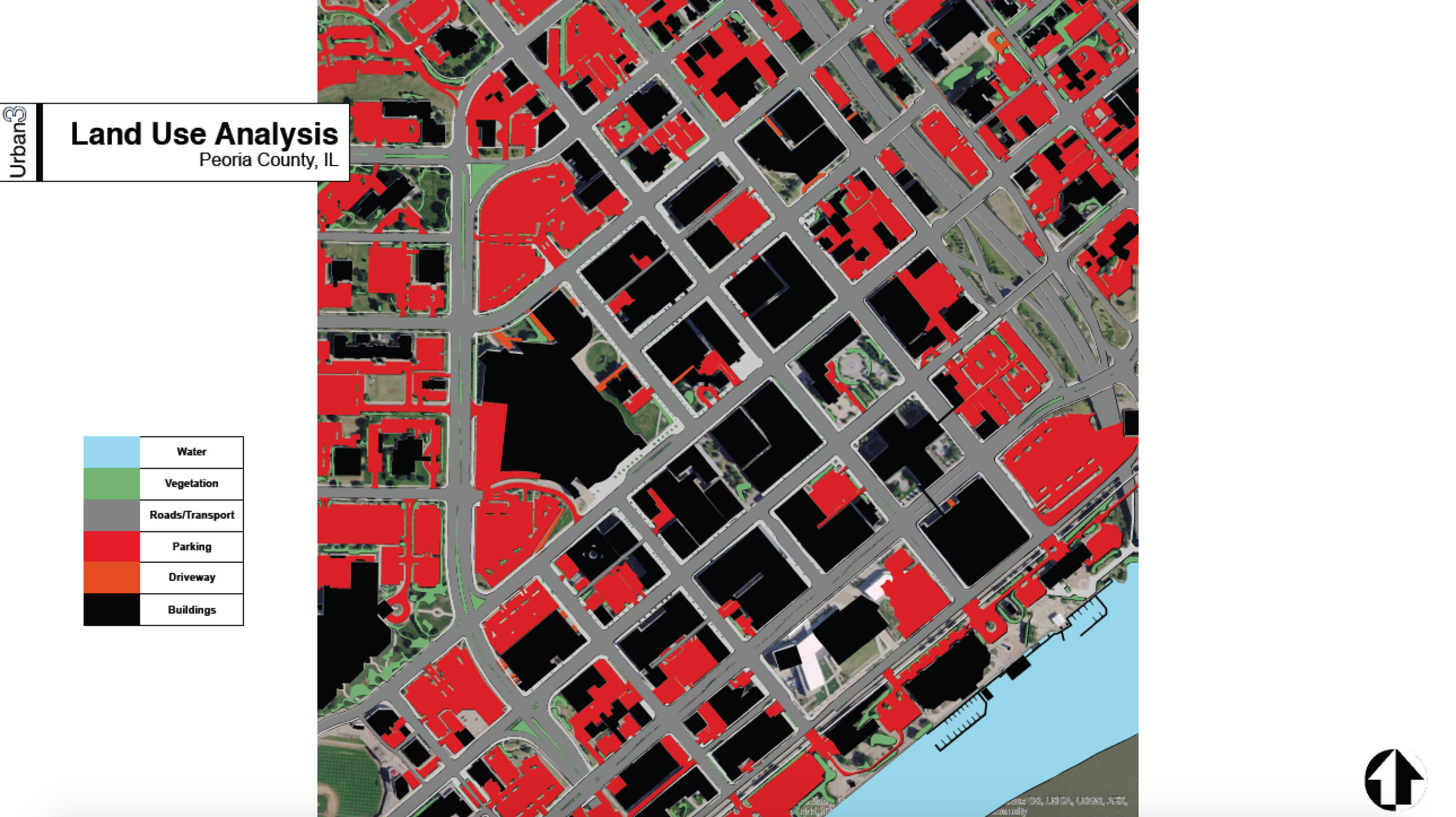
For consumers, the parking experience causes anxiety and frustration as people search endlessly for spots, have to compete with food delivery drivers, and more. And for lot owners, dealing with operators lacks transparency and accountability which results in sub-optimal performance. For a real estate asset that takes up >5% of urban geography in the U.S., there needs to be a more efficient solution for those who own and operate parking lots.

AirGarage is an all-in-one parking operator. AirGarage handles all of the day-to-day logistics required to maximize revenues and make a parking lot business successful. They operate hundreds of parking lots and garages across the U.S. and Canada for landlords, property managers, and others. They utilize technology to lower operational overhead and increase an owner’s parking net income.
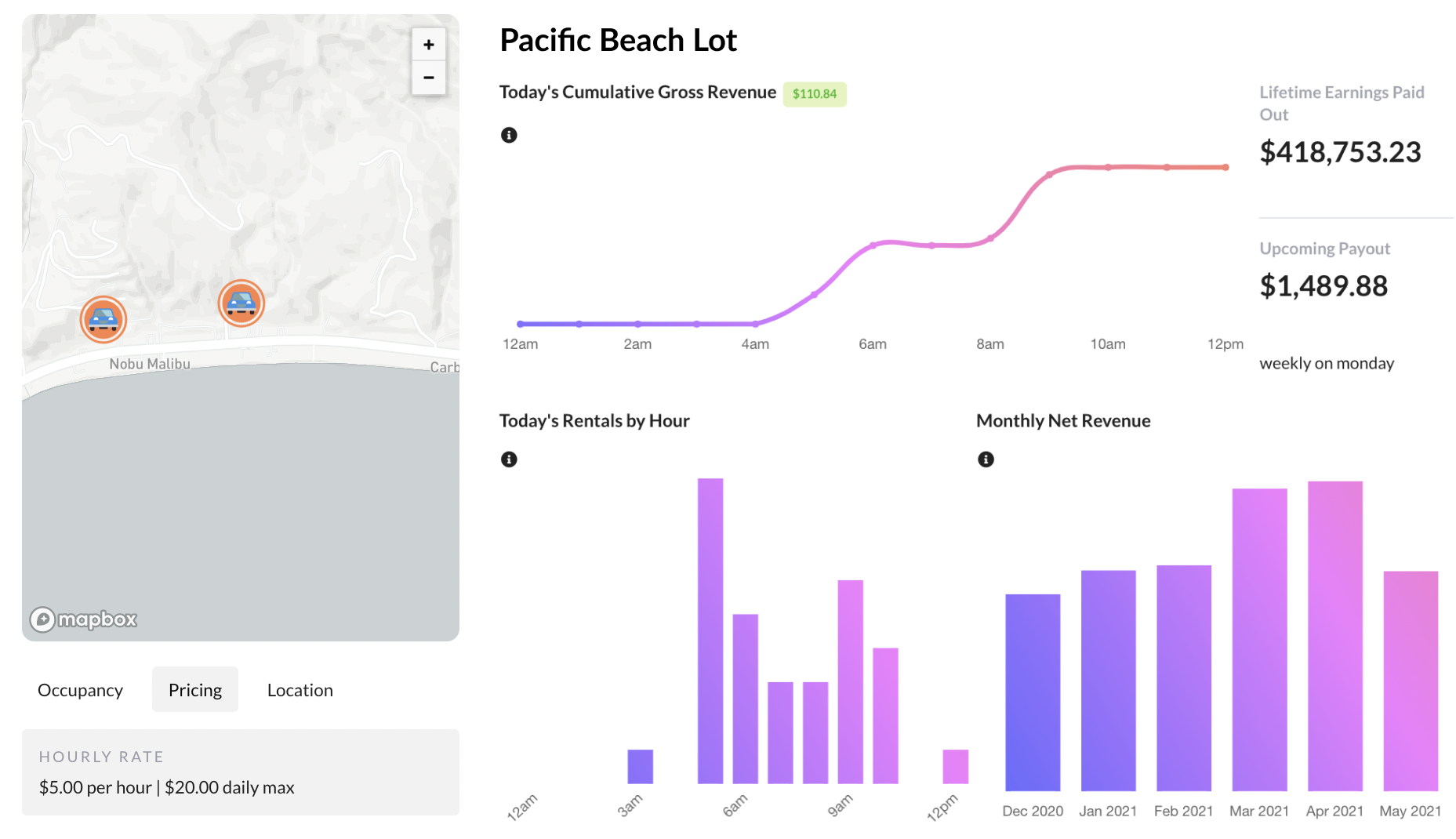
Some key features of the AirGarage platform include: reserving spaces for customers / validating employee vehicles (how is this enforced in a lot?), enforcing parking tickets and timing using enforcement officers and Automatic License Plate Recognition, and demand-based dynamic pricing. Additionally, AirGarage provides real-time data analytics showing historical performance, can forecast occupancy and provides other management tools.
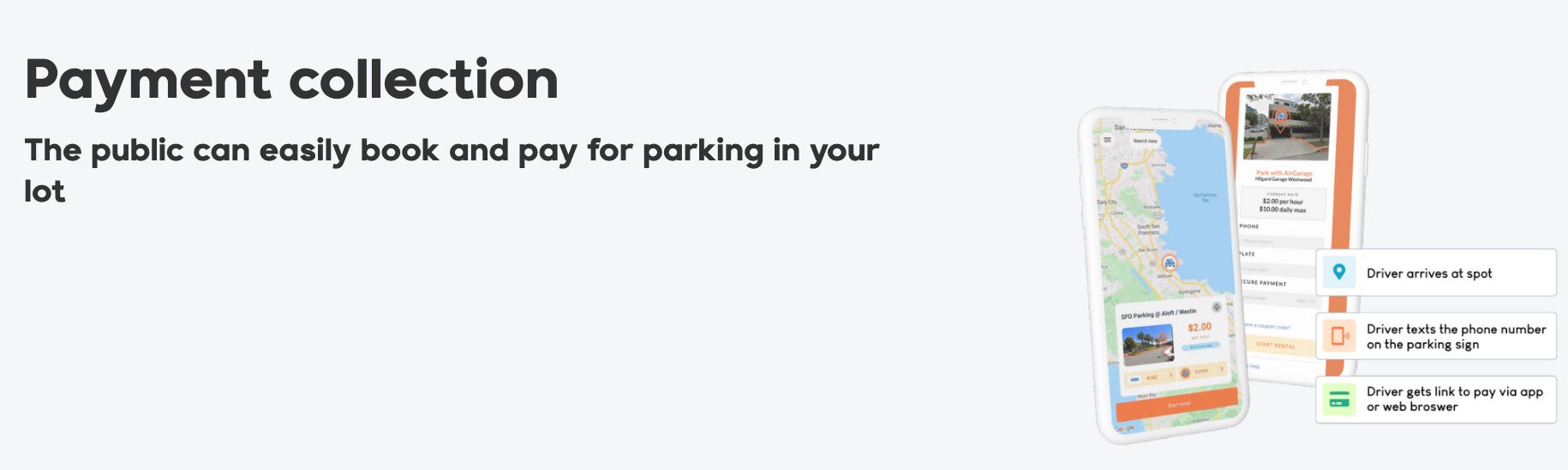
For the consumer, a driver pulls into an AirGarage affiliated lot and their license plate is scanned by proprietary hardware scanners. They then text their license plate to a phone number displayed at the lot to register their car and payment method. Individuals can pay with credit card, Apple Pay, mobile wallets, and more. There is no app download required. Finally, upon leaving the license plate is scanned and the payment method chosen by the customer is charged.
It is unclear how AirGarage punishes violators, but lot owners can purchase hardware devices like Barnacle to help assist in non-tow-away solutions.
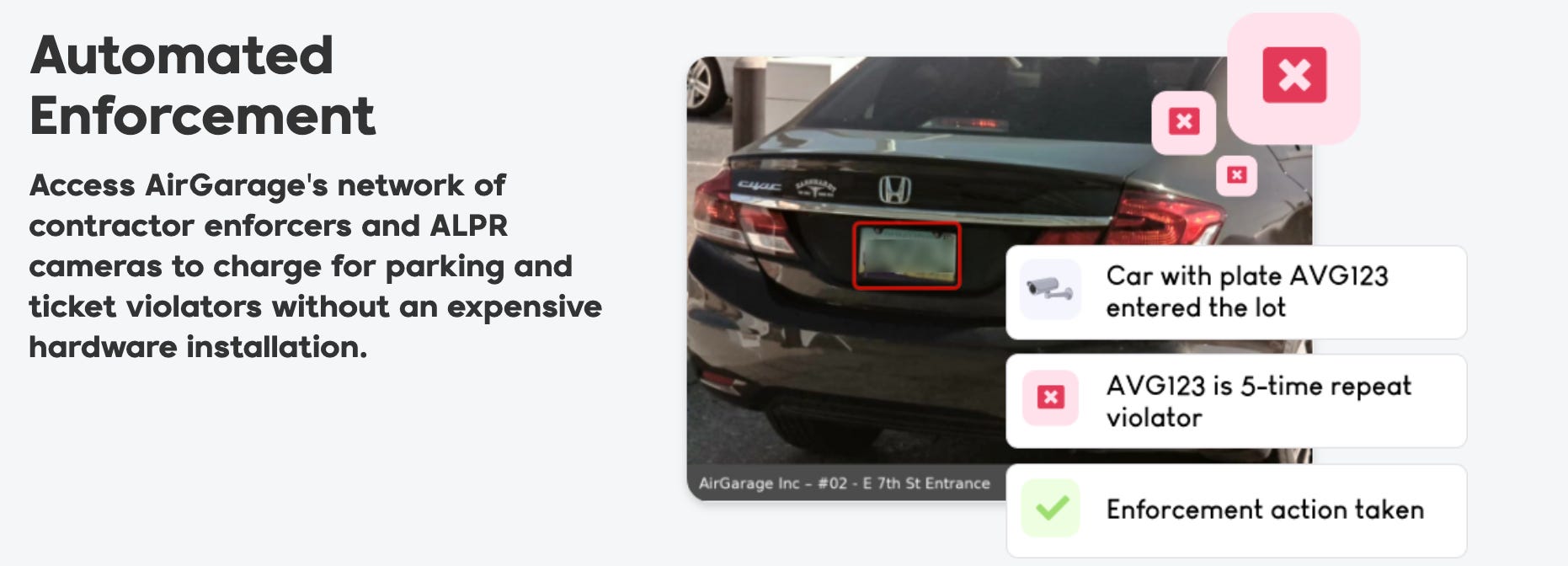
AirGarage functions using a revenue share model where they take 30% of all revenues and leave the remaining 70% to the owner.
The startup offers parking enforcement under a program it has coined “space force.”
Space force works by engaging gig workers — for example an Uber driver who is idling in-between rides — to pull into lots and check license plates. Drivers get paid for each license they ensure is valid, and that fee is also dynamically priced according to how busy the lot is that day.
With the new funding, AirGarage will aim to boost its platform capabilities and add new software solutions for food trucks, cloud kitchens, and other use cases for temporary or longer-term parking needs. A company that promises to modernize the entire parking operations and management stack is likely to have a very sticky product, demonstrated by less than five of their 200 customers having canceled since inception.

So I think there are a few potential risks associated with AirGarage, and keep in mind I do not know the product in and out, so I may be leaving some things out. To begin, I think the “space force” is a really interesting remedy to the enforcement problem, but it feels more like a band-aid than a solution.
Is a gig-worker going to have the depth of knowledge, attention to detail, and feeling of authority enough to properly identify and report trespassers / rule-breakers?
Personally, I think this is a tall ask of gig workers who care more about their primary job; one where they are constantly on call and their wages are dependent on volume.
In the same regard, I think the AirGarage concept would work for simple lots in towns, small cities, and suburban locations; but what about a place like New York City? NYC lots can rarely be left unattended because of how densely packed they are and the need for strict enforcement to be in place. Additionally, given there is a hardware component (cameras/license plate scanners), how well do these pieces of hardware keep up in adverse weather conditions?
Finally, I have a question that AirGarage must have a thoughtful answer to. How does AirGarage ensure successful parking payment and also take appropriate action with parking violators? Most parking lots have attendees or blockades that force you to pay before leaving. If this is removed and your car is simply scanned when you leave, how is payment guaranteed? Additionally, what infrastructure does AirGarage have in place for effective penalties for parking violators? These are all questions and risks we would need to look into a bit more.
AirGarage is a fascinating full-stack parking operator that has set out to solve one of our physical landmass’s largest problems: the place we leave our empty cars. According to Global Market Insights, the parking management sector is going to grow to a size of $6Bn by 2027 representing a 2021-2027 CAGR of 12%. AirGarage plays at the intersection of parking management as well as smart-parking and infrastructure, so this is a large and expanding opportunity. It will be exciting to see if AirGarage and others can make parking easier and more efficient for all.
This weekend
On Friday evening we celebrated one of my best friend’s birthdays.
We dined at Chipotle.
Was not the celebration I was expecting but nothing brings you closer with your friends than getting your arms dirty over a $9 burrito and talking about life on a Friday evening.
Saturday I went to a dinner party with 50 people I had never met before. It was a really cool event where I got to meet people with far different backgrounds and experiences than my own. One guest built a social app from the ground up, another started his own sipping tequila company. Here I am, just happy to have made it thru the workweek. Very fortunate to live in a big city with such different and diverse people.


GW