Let’s put you into the shoes of an engineering team at your favorite technology company…
You’ve spent time, money, and leveraged the help of many developers to build a new software product for a set of end-users; congrats!
Your users love using your product, but in today’s world, they want to be able to work collaboratively with other people in real-time to have the benefit of multiple opinions, live feedback and guidance, brainstorming, and improving efficiency/productivity.
Do you hire more developers on the product team to build these social features from the ground up?
Do you rely on the users of your app to use existing social channels (Slack, Teams, etc.) to communicate and work with their team members?
More generally, building a product (software) is no easy task. It takes several skilled developers (employees & money), many months of development (time), and extensive feedback cycles. And today it is paramount for these products to be collaborative. But in looking into the possibilities for making your product collaborative you face two distinct problems:
Building these tools from the ground up means you need to hire more engineers and spend more money, or you can reallocate your existing product team to this effort. This takes their focus away from cultivating the core product experience and the evolving needs of the users!
Expecting your users to use their existing communication channels means they will have to leave your app. It may take them time to return and refocus on the task at hand, known as context switching (more on that below). This substantially decreases user engagement and may at some point cause your users to search for alternative products that do have social features baked in.
We saw the pain point from the engineering side, let's now look at it from the consumer side. Let me tell you about a far too common scenario in my life and you can tell me in the comments below if it resonates with you.
You're mid-work day. You're trying to focus on cranking out high-quality work and being efficient doing it. You're in the flow....
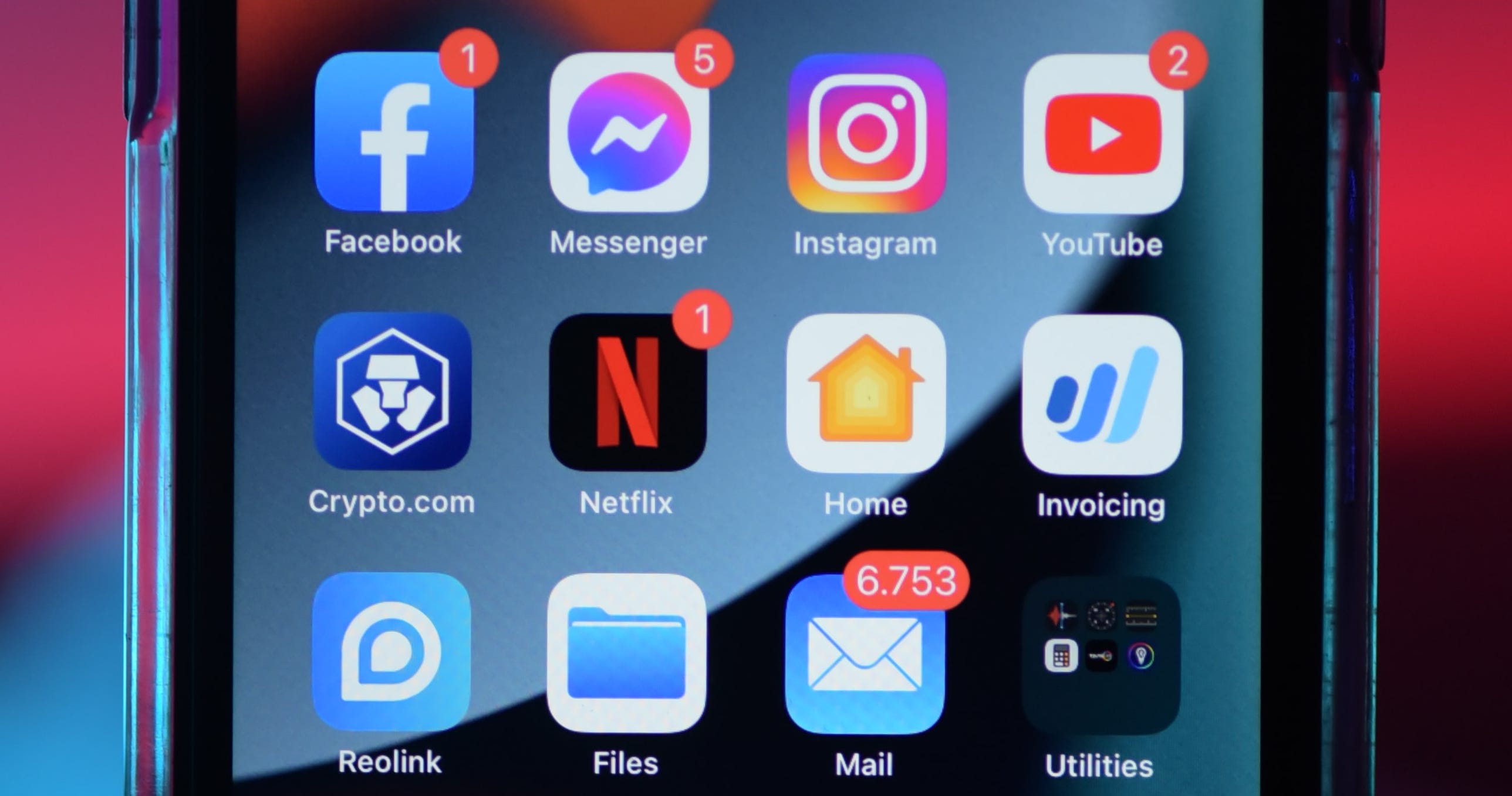
🔔 Ding, a Slack notification.
🔔 Ding, a Teams notification.
🔔 Ding, a calendar invite or email notification.
*And maybe you're lucky and separate your work and personal life but if not: interspersed text messages, phone calls, social media notifications, personal emails, and more.
All of a sudden you're drowning in notifications and don't even know which one to start with. You can't focus and have to drop what you're working on and spend 20-30 minutes checking all the notifications off your list. And finally, you can return to your work. But your mind is stuck on the things you just finished working on, and before you know it you start receiving more notifications. You've gone down the never-ending rabbit hole of what the massive $17Bn work collaboration software market is supposed to solve and now you are a victim of context switching. This hurts your work productivity, but it also hurts the products you ~were~ using as your engagement is lower and you need to drop what you are working on often.
The work collaboration software market is enormous and driven by the tailwinds of COVID, work from home flexibility, and the unclear divide between work and personal life, has seen no slow-down in funding. Loom, Miro, Lucid, Clickup, the list of companies in the space that have fundraised goes on and on. There is a seemingly endless list of apps that promise to make you more efficient, enable better collaboration with teams, and reduce the all too well-known sensation of notification overload. It's just funny that funding is being poured into the space to make us more efficient, when really what it is doing is the opposite...
My thoughts on the never ending funding in the ironic collaboration software market
It is unlikely we have a company materialize that solves all of these problems and make our notifications disappear altogether, but as they say - one step at a time. A company taking the first step by trying to enable increased engagement within the user experience and simplify the developers experience is Cord.
Cord
Cord, a London-based startup, raised $17.5MM in October, which helps companies make their product “multiplayer” for its end users.
Cord’s simple API enables any company to add Slack-like collaboration features like chat, presence, audio and video chat, screen recordings, co-browsing, and more directly to their platform without the company having to build it themselves. This allows companies to increase their users' engagement as they can communicate and collaborate in-app as opposed to constantly jumping back and forth between apps and tasks. It also gives time back to developers to focus on the core experience and feel of your product. Why waste time, money, and effort trying to perfect social tools that many companies have already mastered!?
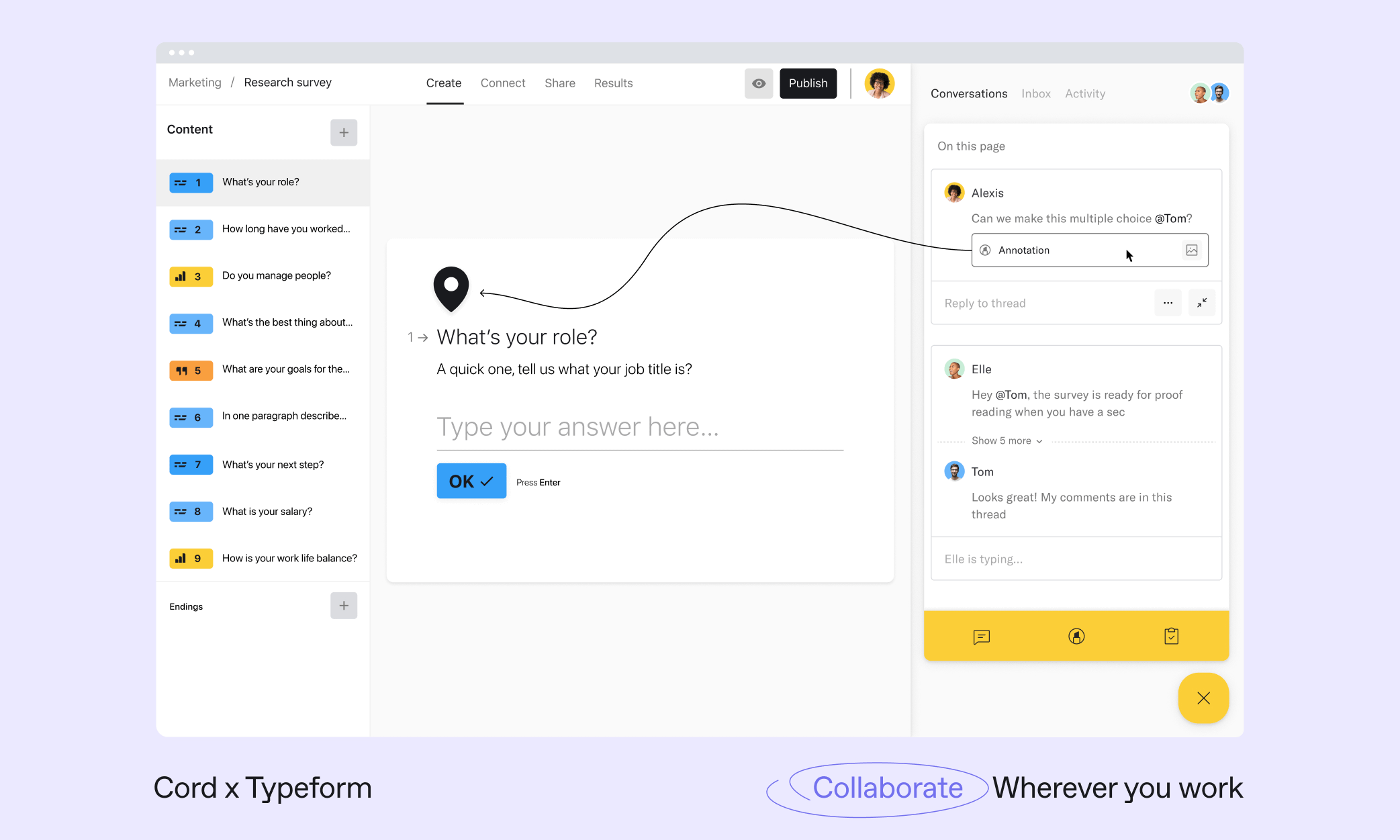
Screenshot showing Cord’s integration with Typeform (Image Credits: Cord)
Context switching is an enormous problem for the global workforce. When we switch from one task or app to another, our brains may still be focusing on the previous task, resulting in attention residue. This has a cost that comes in the form of impaired focus. Benjamin Spall puts it nicely in tangible dollar terms in a post:
"Context switching makes us less effective as workers, increases the number of mistakes we make, and, researchers have estimated, costs the global economy upwards of $450 billion annually."
It is mindblowing but logical that there is a tangible financial cost associated with the lack of productivity that context switching causes. Not only do we have too many methods through which to communicate with one another (Skype, Teams, Symphony, Slack, Google, Zoom, the list goes on…) but it feels like every day there is a new app promising to make you more productive, manage your workflows better, etc. It begs the question, at what point do apps do more harm than good?
What’s the Catch
For Cord and other companies I look at down the line, I also want to spend time looking at potential risks. To do this, let’s look at one of Cord’s most prestigious customers as a case study, Typeform, a platform for surveys and forms. Typeform uses Cord to enable its users to work together on creating, populating, and filling out surveys.
Typeform users are likely employees of an organization, and this organization subscribes to some type of SMB / enterprise-grade business communication tool such as Slack, Skype, etc. It’s hard to imagine users get more value from Cord’s social tools built directly into Typeform compared to those they already have at their disposal with associated entitlements, integrations, and more (except for more engagement). Typeform’s multiplayer experience may make it an easier more engaging product to use relative to competitors, but especially as business communication tools continue to improve, Cord’s collab tools may not be ~mission-critical~.
Let's look at the product itself. An interested company like Typeform decides they want to integrate Cord's social tools into their experience, great. They sign up and have to spend the time calling the Cord API within their tech stack; now their website is ready. But, the catch is that their end-users actually have to sign-up for Cord as well and download and enable the plug-in within their browser to be able to use it! A lesson in human-centered design is that users like ease of accessibility and the path of least resistance. Asking users to download, signup, and enable Cord in their browser is a questionable and concerning barrier for Cord here.
I think Cord's true vision can get lost in the murkiness of the saturation of the collaboration software market. Cord wants to do more than just enable you to collaborate in a single app, to chat with your team to discuss what you are going to order on Seamless, or fill out surveys on Typeform, or discuss market data on CapitalIQ.
Cord gives necessary context for collaboration by allowing users to show, not tell.
Cord wants to help users collaborate across their entire workflow irrespective of what apps someones uses on a daily basis. And they do this by making up for what sending links, messages, and more don't do - providing enough context for you to see, feel, and understand exactly what your teammates are trying to communicate to you and show you.
Personal Fun Facts of the Week
Hope you guys enjoyed this one. I want to end each Next Round post with a bit about what I’m up to recently.
This week I am taking vacation for my birthday to see some family in Miami and celebrate with some friends. Have been helping my grandmother reset all of her passwords for Facebook, Instacart, Bridge Online, and more. We need some funding in that space…
Lots of food and drinks to consume as I reflect on what it means to be 24.