
I watched a YouTube video a few weeks ago on why Casper failed and why Direct-To-Consumer (DTC) startups tend to struggle. Pretty interesting.
The video above walks through it and is a worthwhile watch, but in addition to a few other reasons specific to DTC companies, Casper spent too much on sales and marketing to acquire customers in comparison to what it made from them. Additionally, it has become incredibly expensive to acquire customers using typical advertising methodologies such as Google, Facebook, LinkedIn and more.
Every *one* and every *business* wants each of their dollars to be a dollar well spent. But the problem is, with marketing → dollars are rarely well spent.
According to WordStream’s Conversion Rate Benchmarking, the average conversion rate in Google Ads for Google Search across all industries is 4.4%.
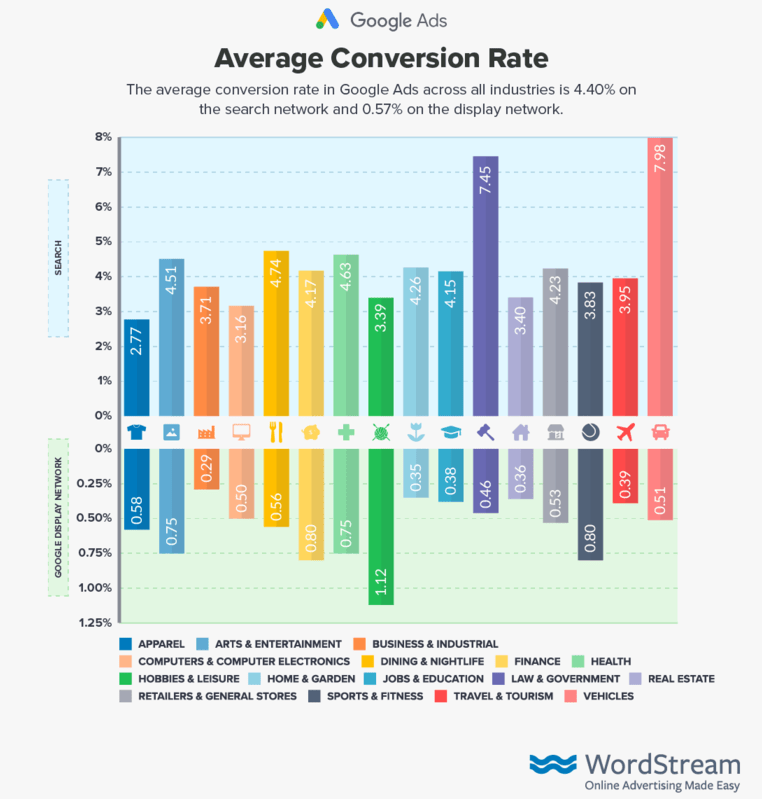
In simple terms, of all the customers that search for something on Google and see your ad, only ~5% of them make a purchase. This is pretty awful marketing efficiency and essentially means 95 cents of every dollar spent is wasted…
What’s more, a 2016 study from Glew showed that 75% of retailers that spent at least $5,000 on Facebook ads ended up losing money on those ads, with the average return on investment landing around (66.7%) - that’s negative 66.7% ROI.
So… How do we fix these issues, optimize our conversion rates, and get more out of every marketing dollar?
Well, using one of my favorite Marvel memes from Thor Ragnarock:

Mutiny to the rescue!

Mutiny is a San Francisco-based no-code AI platform that enables B2B brands to personalize their websites in real-time for different audiences and convert top-of-funnel demand into revenue, without engineers.
On April 20, 2022, Mutiny raised a $50MM Series B funding round co-led by Tiger Global and Insight Partners with participation from prior investors Sequoia Capital, Cowboy Ventures, and Uncork Capital. The round also included current and former CMOs from companies like Uber, Visa, Salesforce, Square, Figma, Condé Nast, Carta, Snowflake, and Atlassian, who see in Mutiny a new and massive opportunity to change the way companies grow revenue.
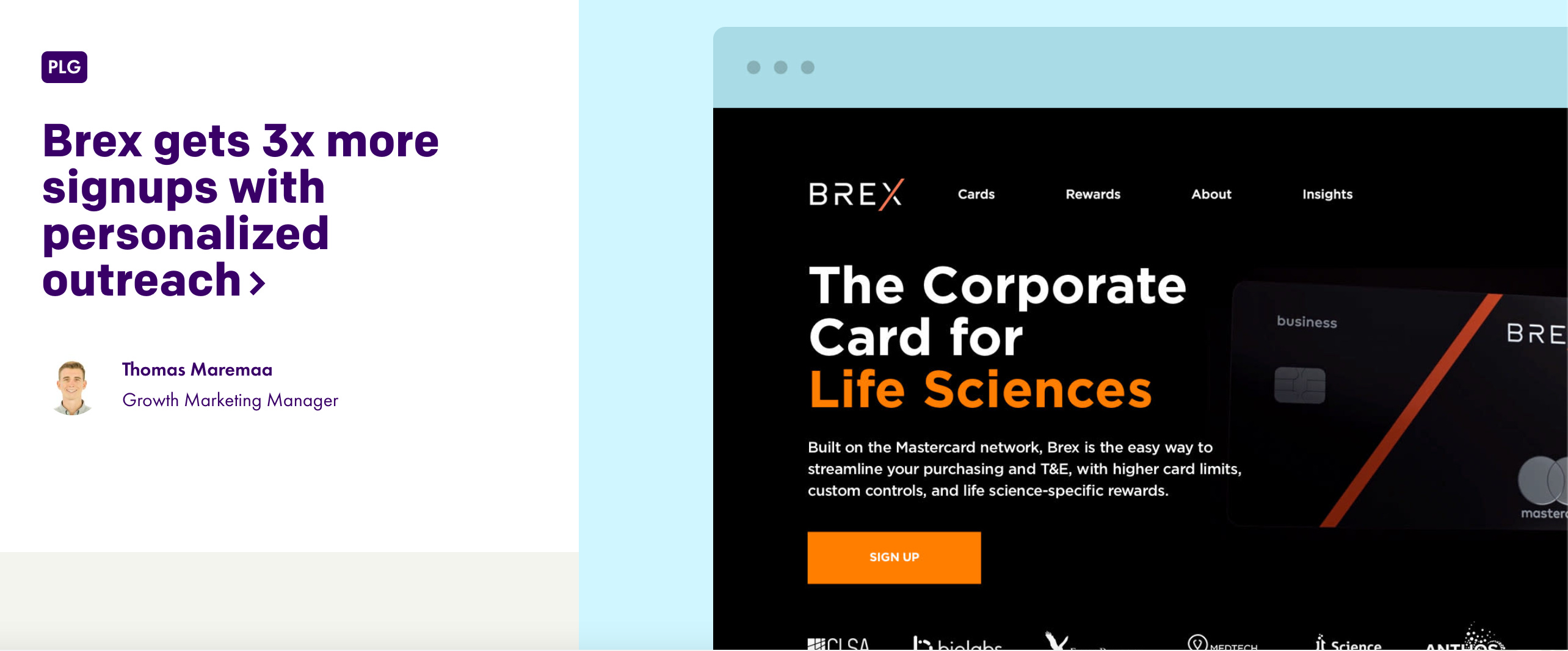
Mutiny has an awesome customer list including Notion, Brex, Appcues, ClickUp, Carta, Qualtrics, Dialpad, Segment, and Fastly.
I think Mutiny is a super interesting concept and has a strong value proposition. But before we get into how the product works, first we need some context.
Tech companies spend an enormous amount on sales and marketing to drive their top line.
Companies drive clicks in the hopes that people make purchases by buying advertisements across channels both online (Facebook, Google, LinkedIn, social media, TV ads, email ads, and more) and offline (billboards, posters, pamphlets).
To actually show this, let’s look at Bessemer Venture Partner’s Scaling to 100MM ARR article. The report, based on their strong portfolio, has some crazy findings. Notably, that companies have S&M % of Revenue of 95%, 70%, 70%, 60%, and 50% for companies with ARRs of 1-10MM, 10-25MM, 25-50MM, 50-100MM, and 100MM+ respectively.
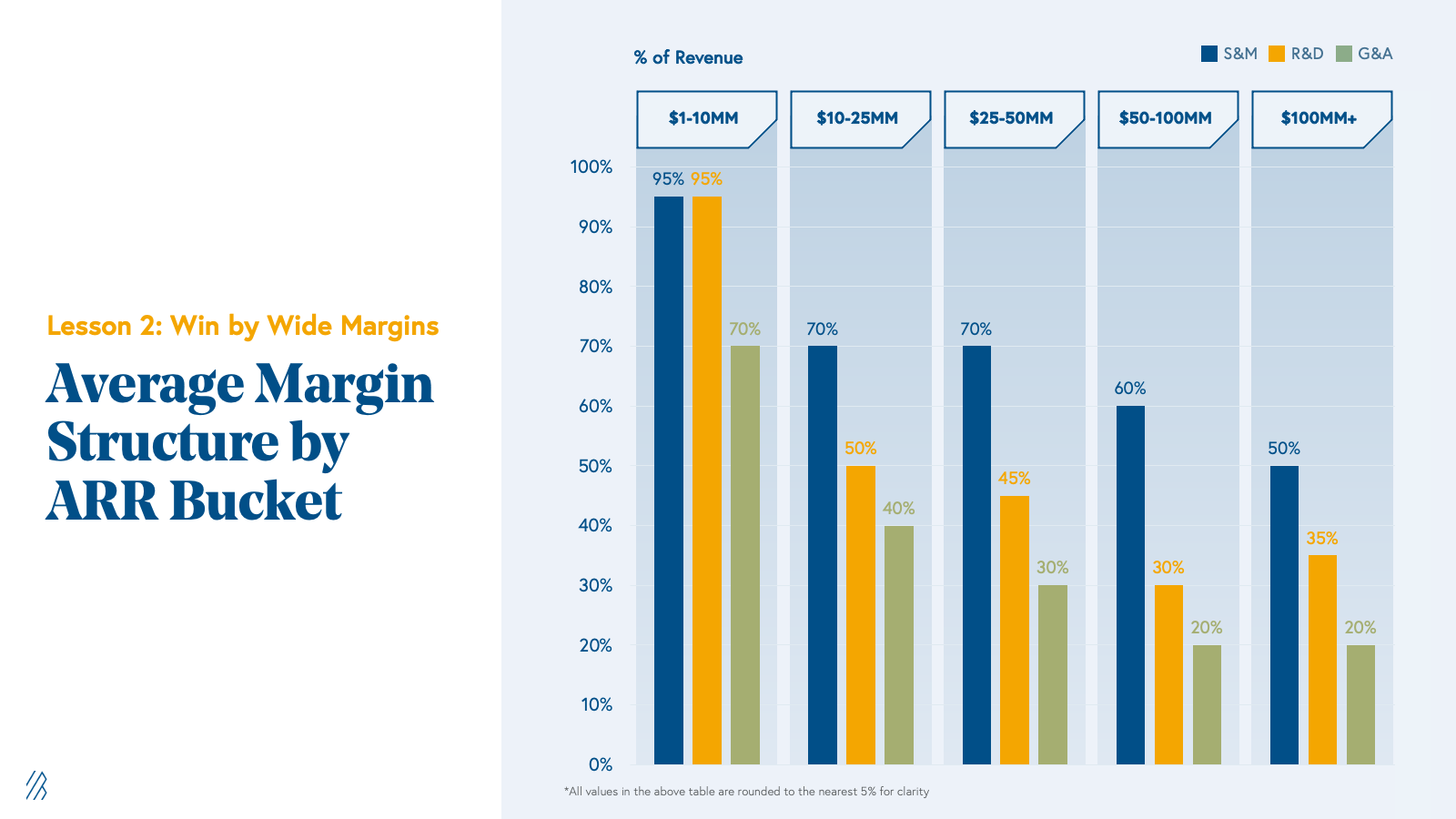
That’s crazy, and shows just how much companies need to spend to acquire customers!
But getting someone to make a purchase as we saw above (via the Google Ads conversion rate chart) is tremendously difficult and super expensive….
With all of the above in mind, Mutiny Angel investor Emily Kramer puts it well,
“People spend all of this money and time getting people [to the website], and then they don’t make sure that once they are there, they convert or they know who they are. . . . Or they don’t have custom landing pages or custom content.”
So once we get those clicks that drive visitors to our home page, how do we get them to buy? The name of Mutiny’s game is
Personalization
Here’s how it works:
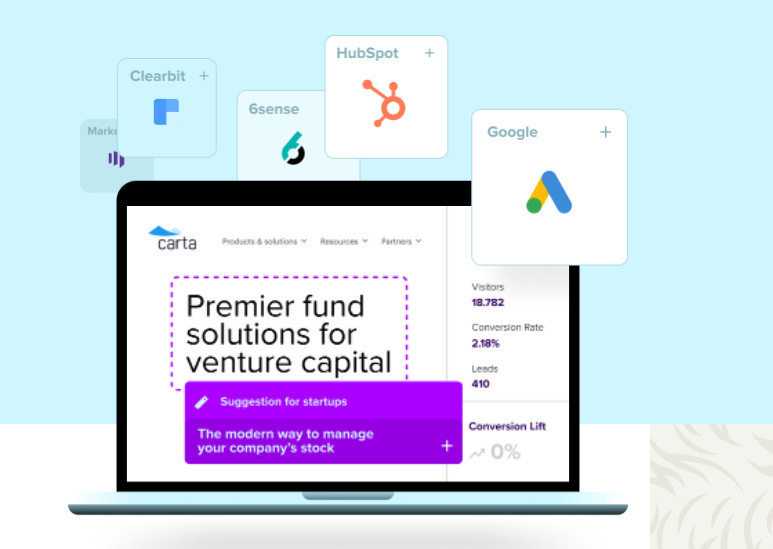
Mutiny first identifies visitors with data that allows Mutiny to classify them by their industry, company size, funnel stage, advertising campaign, and web activity. Mutiny’s AI then recommends the best audience segment that they fall within.
Mutiny then suggests the best content and marketing material to present to the visitor based on what audience segment they fall within. The content is personalized and highly customized to them!
Mutiny allows you to modify your website / landing pages with their visual editor so that you can change language, tone, phrasing, and more to cater to the audience.
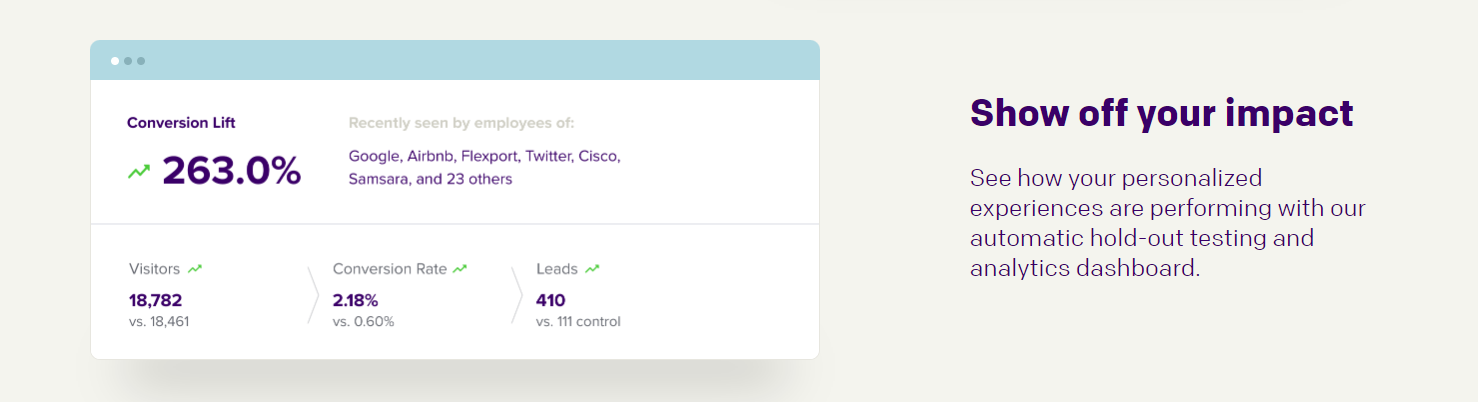
Over time Mutiny improves conversion lift and allows you to analyze these results. You can then test multiple variations of a webpage or let the Mutiny AI optimize for you. Results are shown in the Mutiny dashboard or can be received via Slack.
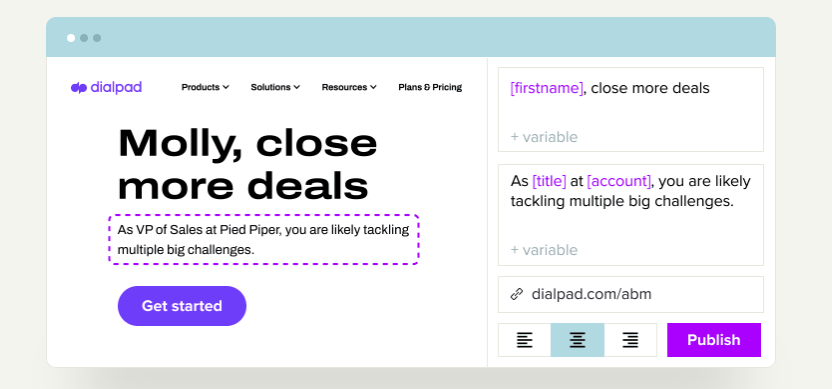
The strength in the Mutiny offering is the ability to truly personalize the content that you can show *each* one of your many audience-s.
Now Mutiny isn’t the first company to create highly personalized marketing. But they are the first ones to allow you to do it without having to spend tons of money on large growth teams heavily staffed with engineers and data scientists.
Bogomil Balkansky, partner at Sequoia said of Mutiny,
“Personalization has always been the holy grail of marketing,” Balkansky said. “You don’t need to explain to marketers that if you personalize messages you’ll get better results. That’s a given. But we just have never had good enough, simple enough tools to do it at scale.”
And the value prop is pretty immediately clear; by tailoring your website with 1:1 customizable content from rich audience data, you can get customers to connect more with the product, make purchases, and thus lower your customer acquisition cost (CAC).
Mutiny creates such great results by leveraging GPT-3 , an AI system that can generate convincingly human-sounding text (OpenAI’s API). Additionally, Mutiny utilizes machine learning on buyer data and seller website data to begin to understand what works “best” for each type of potential buyer, and suggest showing that to a similar brand’s audience.
Mutiny is an awesome idea and one that will certainly help improve ad spend and engage customers to drive them towards purchases.
However, I think there are some notable risks. For starters, some companies are extremely niche and may not need any more customizable / personalized marketing to convert someone from the top of the funnel. We can see this in differences in conversion rates by industry (in the Google ads chart), as well as by simply understanding that some spaces may not benefit from increased personalization.
Additionally, as explained above, it is important to note that Mutiny allows for customizable and targeted marketing on a company’s homepage alone. Companies still need to spend on ads that will get people to click and land on their web page in the first place! Even though it’s the conversion that is the weak-link in ad campaigns, those first clicks are still critical.
As Paul Roetzer writes for Marketing AI Institute,
AI without rich data sets can quickly fall short of accuracy benchmarks — especially when executives have unrealistic expectations.
AI is only as good as the data used to train it. Companies with low customer counts, low frequency of similar customers, or little diversity in customer types are likely to receive smaller or no ROI from Mutiny’s product since the AI / ML is unlikely to have a good dataset to train the model with.
Finally, Mutiny faces competition from a handful of rivals in the AI-powered website personalization space, including Intellimize and Constructor. All of these companies face a struggle in persuading customers that its product can overcome the limitations of personalization engines.
Seaport might be Manhattan’s most underrated neighborhood
I was able to get dinner with some camp friends at Momofuku Ssam Bar in Seaport on Friday. Was great to reconnect with these kids I went to sleepaway camp with from 2007-2013. So much has changed and it’s amazing to get to catch up with everyone. The food at Ssam bar was awesome - we got the tasting menu and it’s like a Korean bbq / Korean fusion restaurant. Honestly, everything on the menu was great, the ambiance was great, and the view of the river / neighborhood was breathtaking.

Was able to have some sunset drinks with a close friend of mine up at Jibs in Hudson Yards on Saturday. Was beautiful and had a great time. May need to convince the sister to have her birthday party there.

Saturday night Redfarm in the WV actually denied me and my buddies service because they claimed I didn’t confirm my reservation (I did). I was pretty disappointed because the hostess was quite mean and I’ve heard great things. We walked over to Fiaschetteria Pistoia. Have received recommendations about this spot multiple times and I’m glad I went. Favorites were the pappardelle al ragu and the tagliatelle tartufo. Neither photographed especially well, but they both tasted insane. The food was well priced and the place was super vibey. They have a window where you can see them making the pasta from scratch, they put the wine bottles on the table (no hard liquor), and are walk-in only. Highly recommend.
GW