

Today we’re gonna talk about Pacaso, a property tech company that has achieved unicorn status faster than any other company according to Crunchbase.

For those that can (likely few of you, for now), owning and reaping the benefits of a second home can be an exciting way to spend your time and money.

Access to rental income, property appreciation, tax benefits, and the ability to use the property as a vacation home and live flexibly are all great benefits to a second home. Even alternatives in the short-term rental space like Airbnb and Vrbo offer inconsistent quality and a lack of professional management. But ownership costs for purchase, maintenance and repair, tax complexities, financing hurdles, potential depreciation of the property, and the work and risks in managing the property as a rental can discourage users from second home ownership.
In recent years, many new companies have popped up, driven by COVID tailwinds to help increase accessibility to the second homeownership process. One such company, Pacaso, reduces the cost and hassle of second home ownership by utilizing a co-ownership model made possible via the creation of a property-specific LLC.
In March 2021, Pacaso, an SF-based company, raised $75MM at a $1.5Bn valuation. Pacaso differs from a timeshare by bringing together a group of co-owners to purchase shares in the equity of a home and enables them to enjoy continual access to a property. Pacaso first purchases a home, partners with local real estate agents to market the property, and then fractionalizes and sells the shares to interested consumers. They then manage all the services associated with the function and maintenance of the homes.
Pacaso focuses mostly on homes in hot destinations within the U.S. such as Napa, Lake Tahoe, Aspen, Malibu, and Miami, but has expanded to Spain and expects to grow throughout Europe in the future. Within these markets, Pacaso tends to offer luxurious / ultra-luxurious homes as Pacaso homes are 4X the price of the median home price in the markets they own in. In contrast to competitors, Pacaso does not allow owners to rent out the property to non-owners. Additionally, Pacaso uniquely offers integrated purchase financing and luxury interior design for its homes.
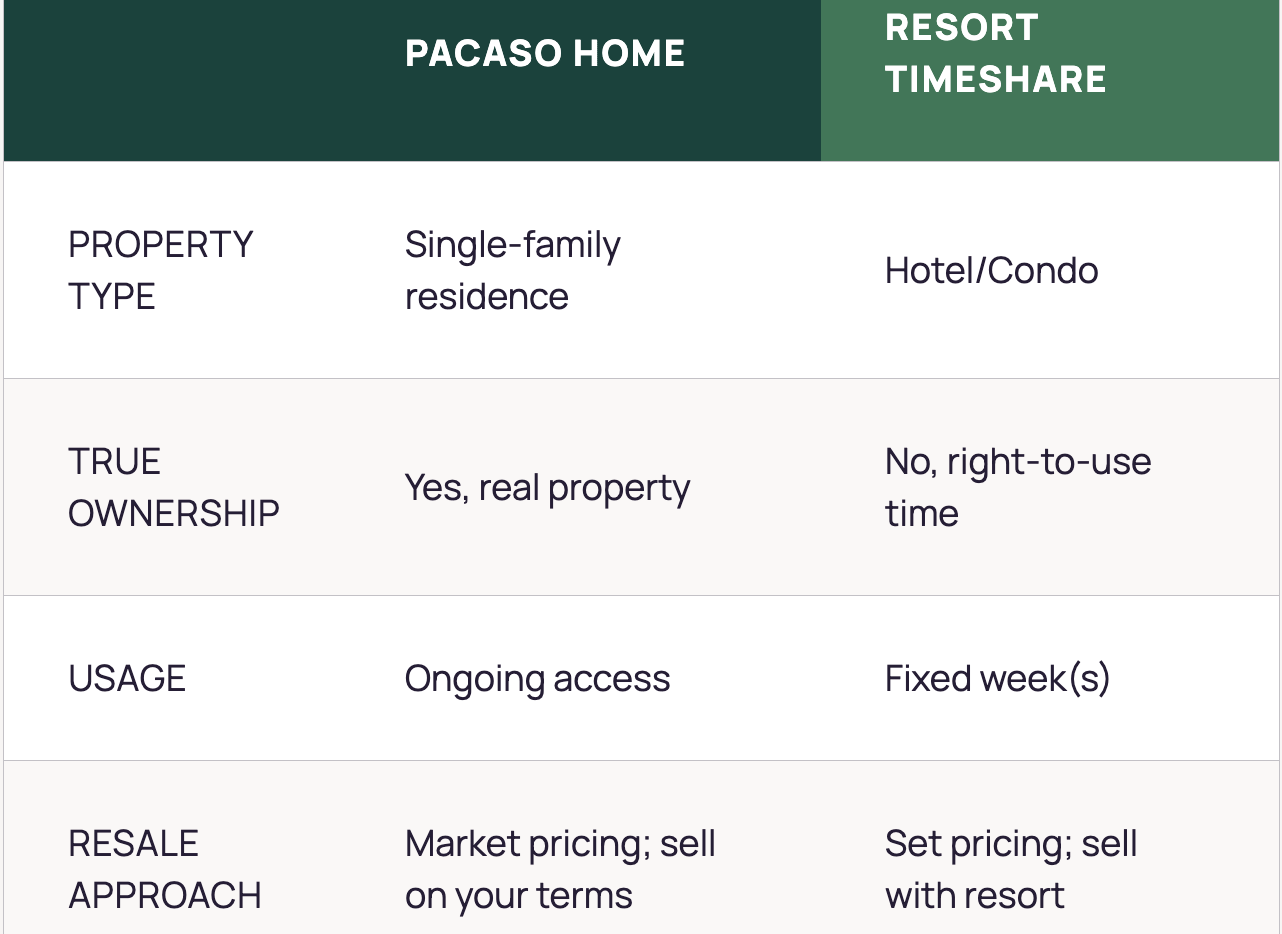
In terms of ownership, each home is split into 8 shares. An interested party may purchase a share (or multiple shares, up to 50% ownership) of the home while paying a one-time 12% fee. Based on their ownership, an owner can book their pro-rata ownership in vacation time in the home in a year. Each owner is responsible for covering their share of operating expenses along with a service fee of $99 to manage administrative duties associated with the property. On the platform, Pacaso owners can schedule their stays, see bills and costs, and book activities/excursions (booked at cost) such as transport, dinner reservations, bike rides, jet skis, and more. Owners can also sell their share(s) in the home after a hold time of 12 months.
The second home market is a multi-trillion-dollar market. In the US alone, there are estimated to be 10 million second homes. Most of the homes sit vacant for 10-11 months in a year and hundreds of millions of families (globally) aspire to own second homes but are unable to due to the challenges mentioned above. According to Redfin, demand for vacation homes in the U.S. is up 87% compared to pre-pandemic levels. Pacaso and competitors such as Kocomo and Kaverna set out to increase access to these empty homes and connect them with individuals across the globe who want this experience!
The second home ownership space has some exciting growth routes. For starters, Pacaso will improve its existing offering, expand to new markets and reach critical mass within existing ones. Pacaso could also offer ancillary services associated with their guests’ stays for an additional fee (charged above cost) that will drive margins and profits. Another interesting growth opportunity could be a “Pacaso Concierge” where for an additional subscription fee, a Pacaso owner can have access to a personal travel concierge to help them with all of their needs during their stay.
On to the risks! Despite how interesting this space may seem as it enables access to a luxury asset, there are some noteworthy risk considerations. From a consumer’s perspective, although Pacaso is marketed differently than the time-share market and makes second homeownership more accessible, it still inherently targets a wealthier demographic with access to substantial discretionary capital (the cheapest “home-share” on the website as of this writing is $285,000 before a 12% purchase fee). Individuals who may try to push their wallets may face “buyer’s remorse” that is well known to plague consumers in the timeshare market (and users can be locked into their purchase for 12 months or more). Consumers also may not be able to use all of their allotted time per year, and a 12% fee on a purchase is an enormous amount of money to pay on top of the equity purchase of the home. For many of these consumers, it may make more sense to continue to utilize the $1.5 Trillion global hotel and resort industry that is tried and true!

In general, customers may find it a lot easier to continue to think about their vacation and discretionary income on a short-term horizon rather than utilizing a substantial amount of savings for a home. Moreover, there are hurdles to using these services as they do follow the typical home purchase, ownership, and sale process. Dealing with these processes, minute details, and all the related parties associated with them is expensive, time-consuming, and inconvenient.
From an investment perspective, Pacaso is an extremely capital-intensive business. Acquiring homes in hot real estate markets which are highly valued as a result of COVID-19, work from home flexibility, and more is expensive! It is also important to note that Pacaso is directly competing with the massive hotel and resort industry as well as smaller adjacent industries such as the time-share space. Although the platform promises ease in second home ownership, the sheer ease of staying in a hotel or Airbnb with no strings attached is going to cause churn. Pacaso faces clear competitive risk when you compare it to simpler, less complex alternatives. Additionally, Pacaso's model relies entirely on achieving economies of scale in managing their operating expenses across real estate markets. The bulk of their cost savings will come from saturating real estate markets and then partnering/negotiating with marketers, agents, property managers, repair and maintenance teams, lawyers, and more to work out discounted rates. The end goal is to have fewer contractors work across a large number of properties in each market. If Pacaso is unable to reach this scale and effectiveness, they will likely fail. Pacaso also faces high marketing spend/customer acquisition costs to inspire consumers to move towards a purchasing decision. Moreover, there is a low conversion rate to convert an average consumer to justify the price of and the many hoops associated with a home purchase.
The time-share market is a large and popular use of discretionary income for those who have access to it. But it has not been without its flaws and future obstacles to champion. I would certainly hesitate to invest in this space given the capital-intensive nature and many other risks associated with it. Pacaso, which was founded by Zillow alumni Spencer Rascoff and Austin Allison is just one of many new companies (Kocomo, Kaverna) in this co-ownership space. It will be interesting to see if Pacaso will be able to overcome the challenges in front of it and not only see out profitable business models but fundamentally change second homeownership and its accessibility for consumers worldwide.
Personal Fun Facts of the Week
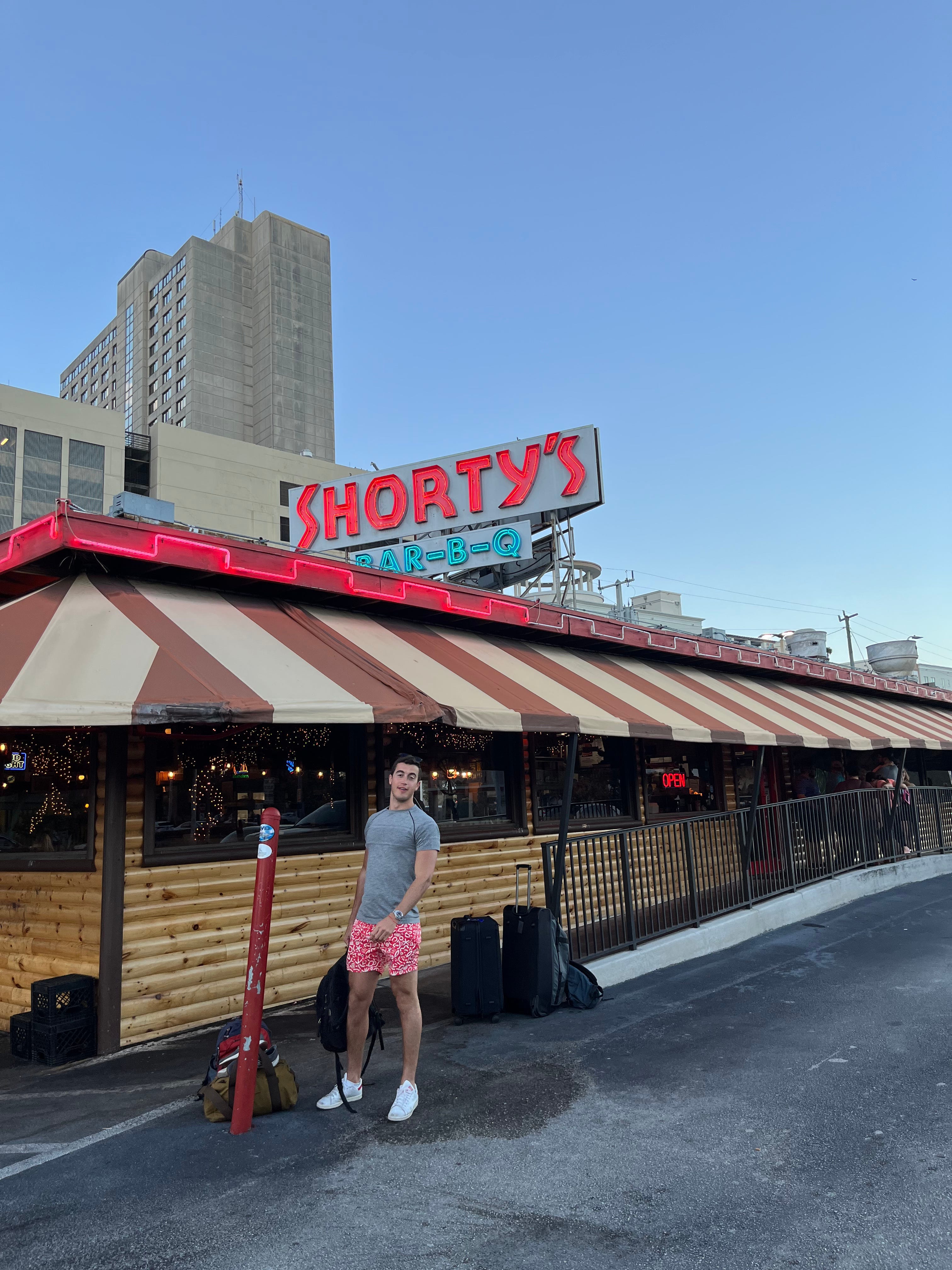
Had a great weekend in Miami with my buddies. Ate a ton and got a lot of great photos with friends, some of which I haven’t seen since college graduation. Was more of a reunion than any type of birthday celebration, which was awesome. Work week has been off to the races as I returned to NYC on Sunday. Before I left had some of my favorite BBQ, Shorty's, and put myself into an enormous food coma. Praying it starts to get a bit warmer here!
GW