
Substack just added a voiceover feature for new posts. If you’d rather listen to this article as opposed to reading it, you should see an option to listen to the post via email, on the web, or in the Substack iOS app.
Marketplaces are one of the most popular business models of the digital age. From companies like Amazon and Ebay of yesteryear to gig economy companies like Airbnb, Uber, Grubhub, Poshmark, Cameo and more, the marketplace model is one we will not see go away anytime soon.

Marketplaces connect sellers and buyers (supply and demand) without taking risk on the actual goods or services that are being exchanged. The marketplace functions as the middle man.
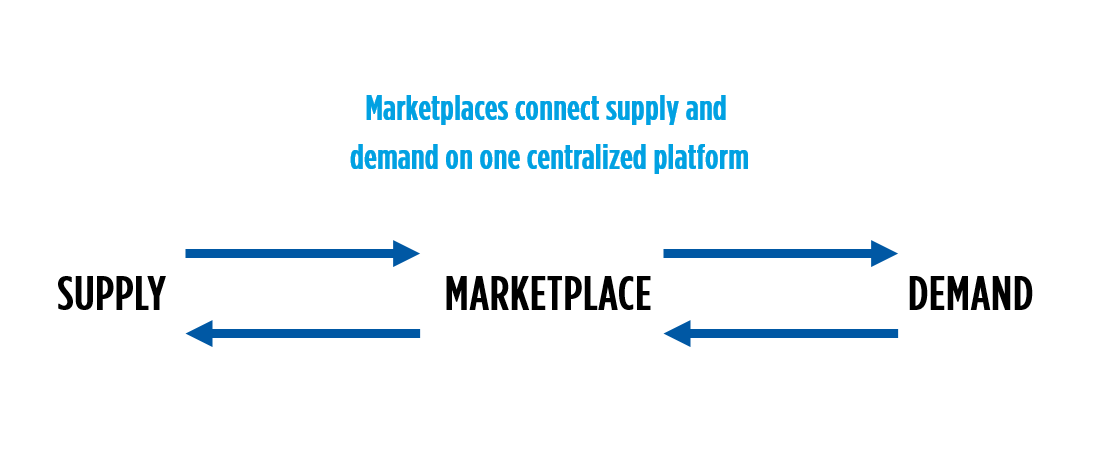
We see this in:
Postmates (food delivery) - restaurants are connected with hungry consumers
Uber (taxis) - cab (or car) drivers are connected with people who want to go somewhere
Amazon (e-commerce) - retailers and merchants selling a product are connected with consumers who might want that good
Cameo (entertainment) - celebrities are connected with consumers who want a personalized video from them
On NextRound we’ve talked about other marketplaces like Kard, Protege, Pipe, PartnerStack, DishDivvy, and more.
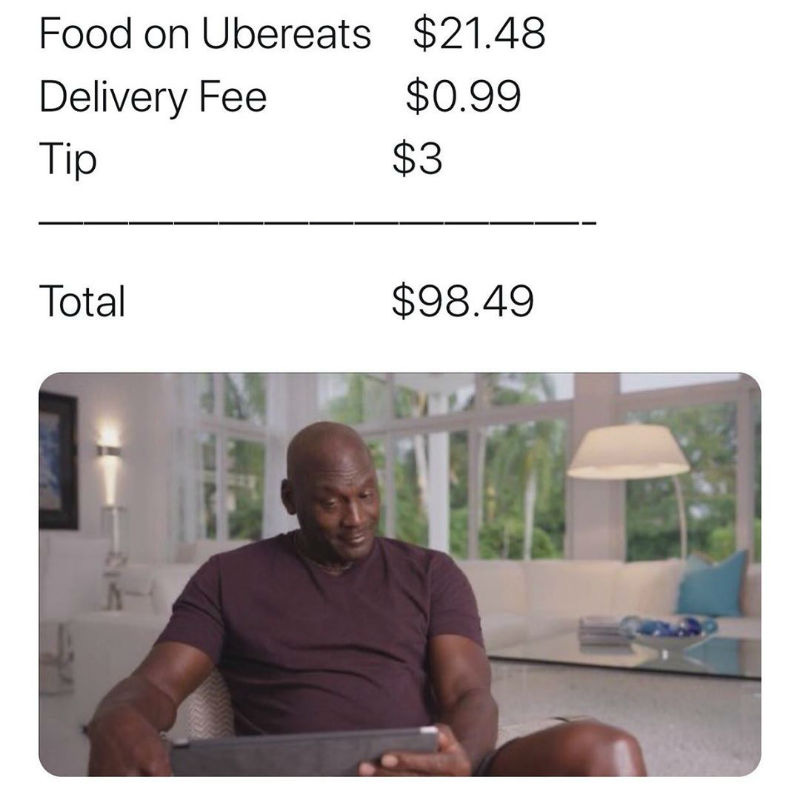
You know those additional fees that make your $4 coffee $25? That’s the marketplace taking a cut of the total for themselves!

Marketplaces are awesome companies because they promote self-sufficient network effects, have high user stickiness / retention, high margins, and give the marketplace access to large amounts of data (from which insights can be drawn).
There are all types of marketplaces, some of them differ by the end-users they serve (consumers - B2C, or businesses - B2B).

Marketplaces also differ by how they make money - whether it be by a take-rate / commission (Ubereats), subscription (LinkedIn premium), freemium model (Spotify, Unsplash), listing model (Realtor.com), and many more.
But one thing is true for all of them:
Marketplaces are highly dependent on the gross merchandise value (GMV), or the total value of what is being exchanged between buyers and sellers on the platform. Marketplaces’ revenue is dependent on this volume, as it is their primary revenue stream and one that is typically not diversified. What are other ways to bolster transaction volume on the platform while also diversifying revenue streams? Some marketplaces may try diversifying by combining multiple of these marketplace business models (i.e. Ubereats has a subscription membership Uber One). But for many commission model marketplaces, they need to turn elsewhere.
Enter sponsored listings and ads.
At the very top of every Amazon search, there are a few listings noted as “Sponsored” or “Featured”. In the snippet below, I searched for “hand food blender” which I have been looking to buy for some time so I can use it instead of a food processor / nutribullet. As you can see, the first 2 results have “Sponsored”, sitting above the listing titles.
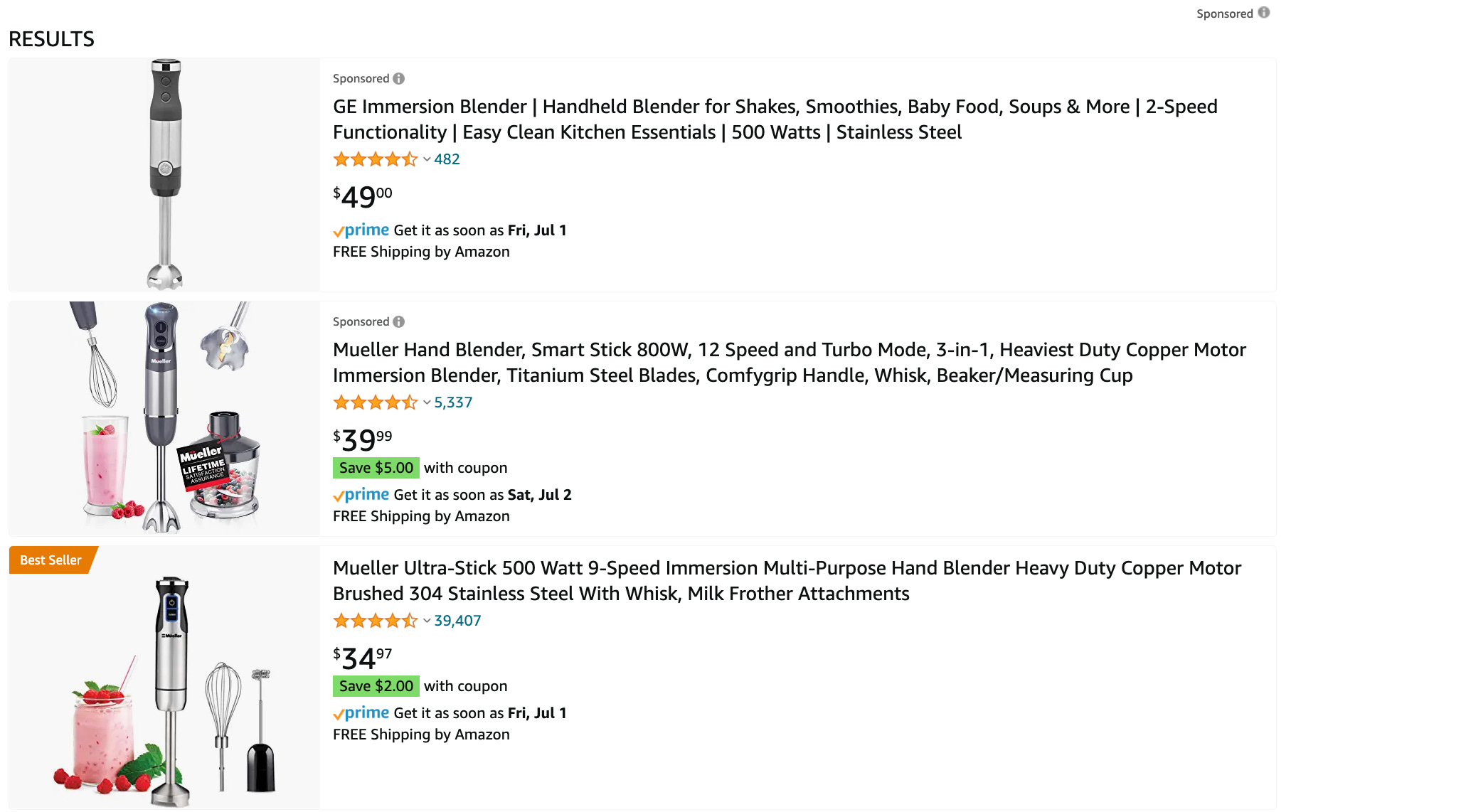
Supply-side users on these platforms can “promote” or bump their offerings to the top of the marketplace feed by paying a fee. This is typically done in an auction-like manner, in which vendors bid in as fast as a few nanoseconds to win and have their listings placed at the top of any search.
As with many of the problems software has solved in the last 15+ years, building and maintaining the infrastructure to enable this luxury: ads (and the highly lucrative revenue stream it grants) is a highly labor-intensive endeavor for marketplace companies. How can marketplaces of all sizes, both big and small, get the benefits of auction-based advertising without having to deal with the headache of building it from scratch?
Today we are going to look at Topsort, which does just that.

On March 10, 2022, Topsort raised $8MM in seed funding that values the company at $110MM. Investors included Pear Ventures, Quiet Capital, FJ Labs, Micky Malka (Ribbit Capital), Lydia Jett (SoftBank), Akhil Paul, Comma VC and more.
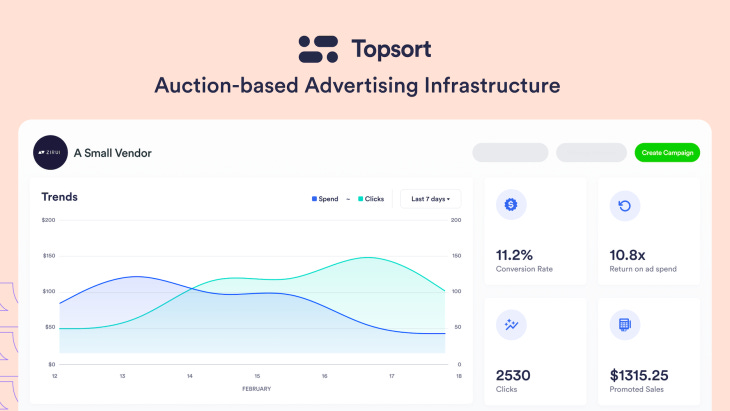
Topsort is an all-in-one toolkit for adding auction-based advertising directly to your marketplace, without having to build it out yourself.
Michael Ostrovsky, Francisco Larrain, and Regina Ye founded Topsort in 2021. The company was originally started to provide the infrastructure and APIs needed for smaller marketplaces to easily host ads without the reliance on cookies, which are poised to go away. Marketplaces that harness the power of sponsored listings increase not only their marketplace-based revenues for increasing GMV but also open up a totally new revenue stream.
Topsort integrates cleanly with any tech stack and presents a clean and convenient user experience that vendors can easily adopt.
In simple terms, Topsort allows a marketplace to enable the infrastructure for hosted ads on their platform. It then works directly with vendors who provide the supply on your platform to place 3 different types of listings:
Sponsored Listings - Paid premium placements in product listing pages, both in search and in categories. Sponsored listings are the base and most straightforward listing, similar to those you see first in your Amazon or Uber Eats search results.
Banner Promotions - Promote brands and products on key locations across your marketplace with low latency, high performance, and easy scalability. Banner promotions are large advertisements for a product within search results that catch the eye of the consumer. Think of these as sponsored listings 2.0
Video Ads (in beta) - Entice your vendors to create engaging media advertising powered by Topsort to enhance the customer experience on your marketplace.
Once Topsort is successfully integrated into the marketplace’s tech stack, the marketplace can control how ads are shown, how ad quality and relevance are measured, and which vendors can launch campaigns. Additionally, vendors can begin to onboard into Topsort’s system.
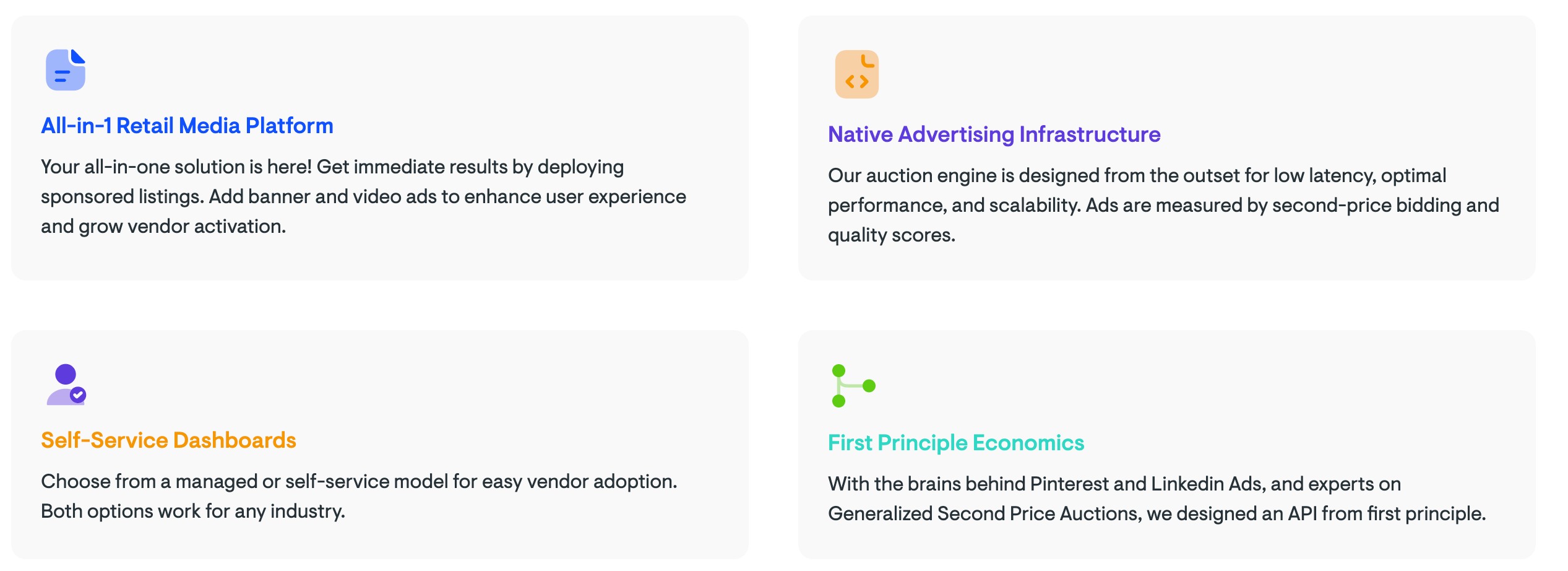
Once a vendor integrates with Topsort, they can begin buying ads. The ads are sold to vendors through ultra-fast auctions. These ad auctions can be run in 20 milliseconds with 10,000 requests per second. Vendors can use the Topsort Vendor Dashboard to easily create campaigns, promote listings, and learn from their data all in one place. Vendors can also allocate their ad spend according to real-site traffic to optimize their total spending. Additionally, clicks on sponsored listings are captured and reported so that vendors can see tangible ROI and performance on their ads.
When [vendors consider] how much to bid for clicks, Topsort provides suggestions using its proprietary algorithm to maximize clicks and conversions. It also has an auto-bidding feature for cost-per-click ads so that vendors can input a budget and time period, and the company will take it from there. Ye said it can guarantee between two times and four times in returns depending on the marketplace.
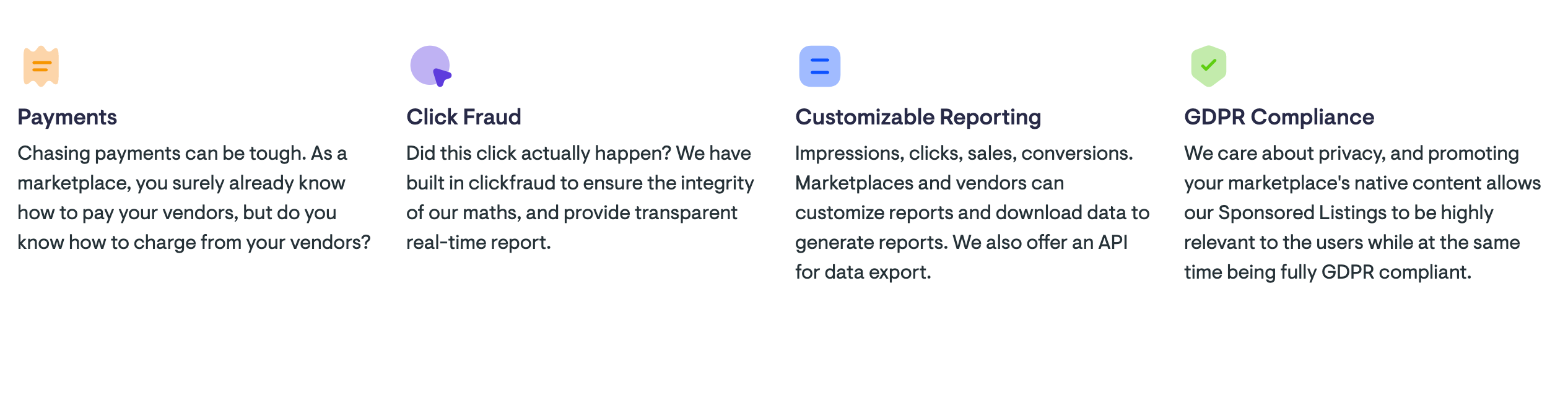
Topsort also has many built-in features to improve the overall vendor experience when using the platform.
So what do we think about Topsort?

First, many of the medium to large-scale marketplaces have engineering teams devoted to building out marketplace functionality as well as advertising capabilities. Not only this, but as discussed, ads open up a totally new revenue stream and are a priority for even the smallest engineering teams.
There is one standout question to me off the bat on Topsort’s total market size:
How many marketplaces are there that are A) large enough to have an engineering team that isn’t already focusing on ad infrastructure or b) small enough that their dev teams have other things to work on so Topsort makes sense to pay for?
It’s not 100% clear what their business model is but likely it is a subscription for the marketplace customers + some type of transactional revenue for each successfully completed auction. On the vendor side, it’s likely a small fee for a won auction. Knowing this, is the subscription priced well enough that it is worth subscribing to as a marketplace? Additionally, as a vendor, is integrating with Topsort easy to do so that you can start bidding for sponsored listings or continue to do so without any delay/complications?
Regardless, Topsort opens up an entirely new revenue stream for marketplace model companies, one of the most popular business types. It will be interesting to see how the product evolves and if the need truly exists with a large enough customer base. Let me know if you have any thoughts on Topsort in the comments or by replying to the email directly!
Back in the USA
I got back to the States this Saturday. Italy / France was seriously wonderful and so relaxing. I put on 10lbs at least, very easily. Focaccia was the food I enjoyed the most while there, it was seriously insane. I’m halfway through my final week of work at Morgan Stanley and feeling sentimental about tying the bow on my two years post-Duke University, at this awesome firm. Starting my new gig in a few weeks after some solo travel and vacation with friends!


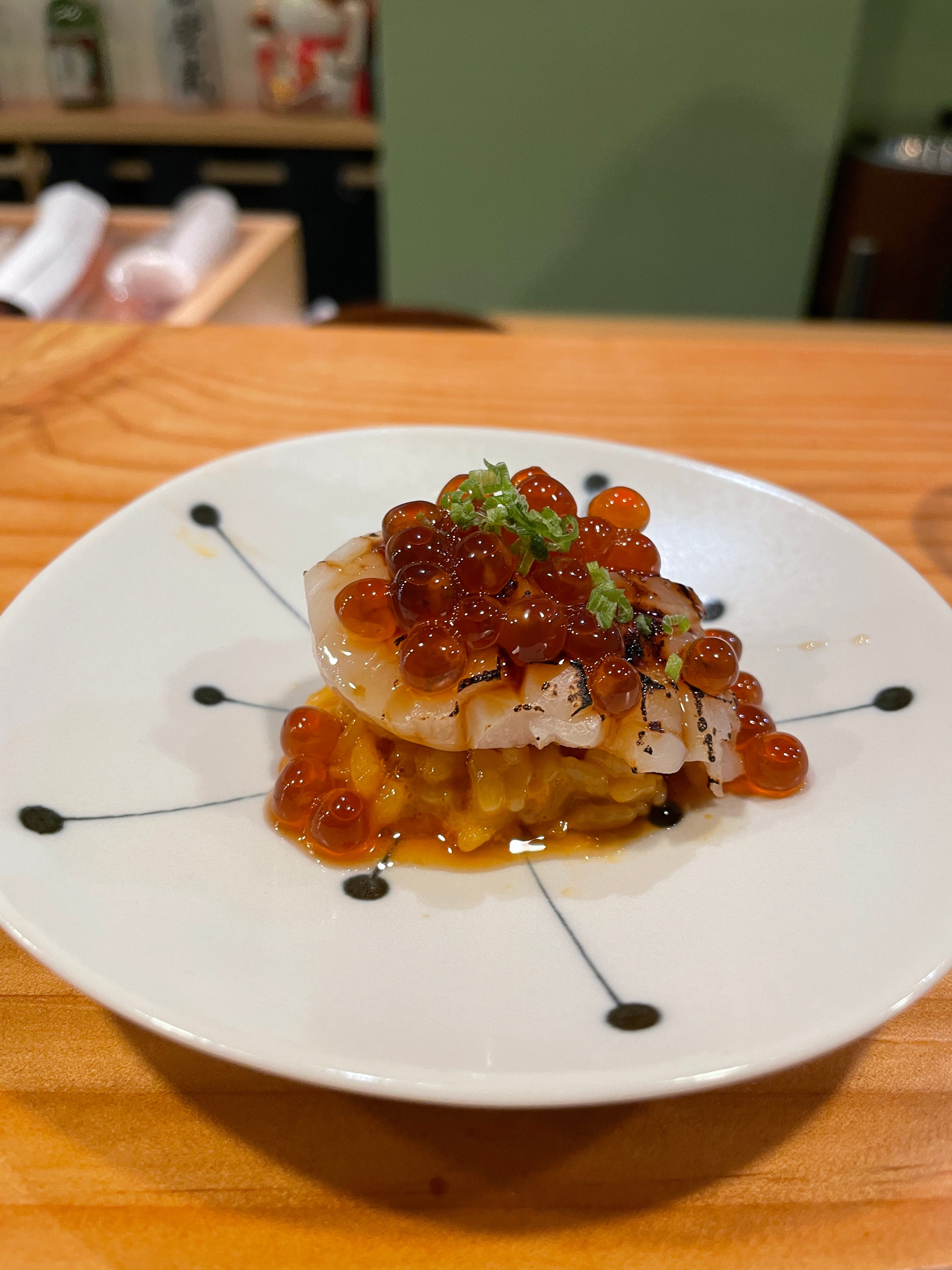
This week I got the chance to go to the Tyger (from the restaurant group behind Chinese Tuxedo) and also got to try an omakase place called Genki Omakase on LaGuardia Place, just a block south of Washington Square Park. The omakase options will run you anywhere from $60-$95 for 10+ pieces but the coolest part is that it is BYOB. I wish all of you a wonderful fourth of July with friends and family!
GW